Learning That Shapes Lives

Our academic model blends international best practices with local relevance to provide a rich, holistic education that goes beyond the classroom. We nurture skills such as innovation, collaboration, critical thinking, and problem-solving—building lifelong learners ready to thrive in a complex world.

Our Curriculum

Welcome to the future of learning at MPESA Foundation Academy. We proudly implement the Competency-Based Education (CBE) curriculum, a dynamic and modern approach to learning designed to prepare students for the demands of the 21st century.

Unlike traditional systems that focus heavily on memorization for a final exam, CBE shifts the spotlight to what a learner can actually do with the knowledge they acquire. Our goal is to nurture every child’s unique potential by emphasizing practical skills, core values, and real-world application.

CBE

Competency-Based Education (CBE) – Senior School

In January 2026, MPESA Foundation Academy introduced the Senior School Competency-Based Education (CBE) curriculum, beginning with Grade 10. The programme is designed to develop competent, ethical, and innovative learners equipped for higher education, entrepreneurship, and the world of work.

The ICT-enabled curriculum focuses on mastery of competencies, values, and practical skills while allowing students to pursue personalised learning pathways aligned with their talents, interests, and career aspirations. Learning is enriched through community engagement, continuous assessment, and real-world experiences that foster critical thinking, creativity, collaboration, citizenship, and digital literacy.

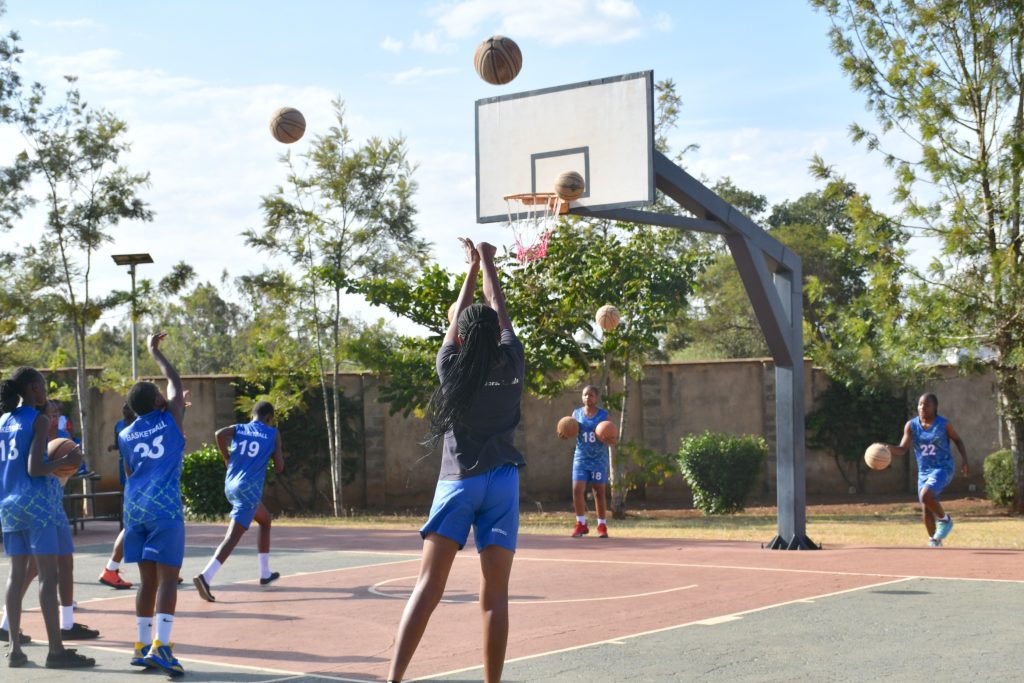
To complete the programme successfully, students demonstrate competency through continuous assessments, performance tasks, and national assessment standards set by the Kenya National Examinations Council (KNEC). Beyond the classroom, students also participate in talent development through Sports and Music, as well as innovation and entrepreneurship programmes.

Arts and Sports Science

This pathway nurtures creativity, artistic expression, and physical excellence through subjects such as Music and Dance, Theatre and Film, Sports and Recreation, and Fine Arts. Complementary subjects include Literature in English, Fasihi, Biology, and Business Studies.

Social Sciences

Designed to cultivate analytical thinking, ethical leadership, and civic responsibility, this pathway offers History and Citizenship, Geography, Business Studies, Literature in English, Fasihi, and foreign languages (French, German, and Mandarin Chinese). Core Mathematics is available as a complementary subject for learners pursuing careers requiring advanced mathematical skills.

STEM (Science, Technology, Engineering and Mathematics)

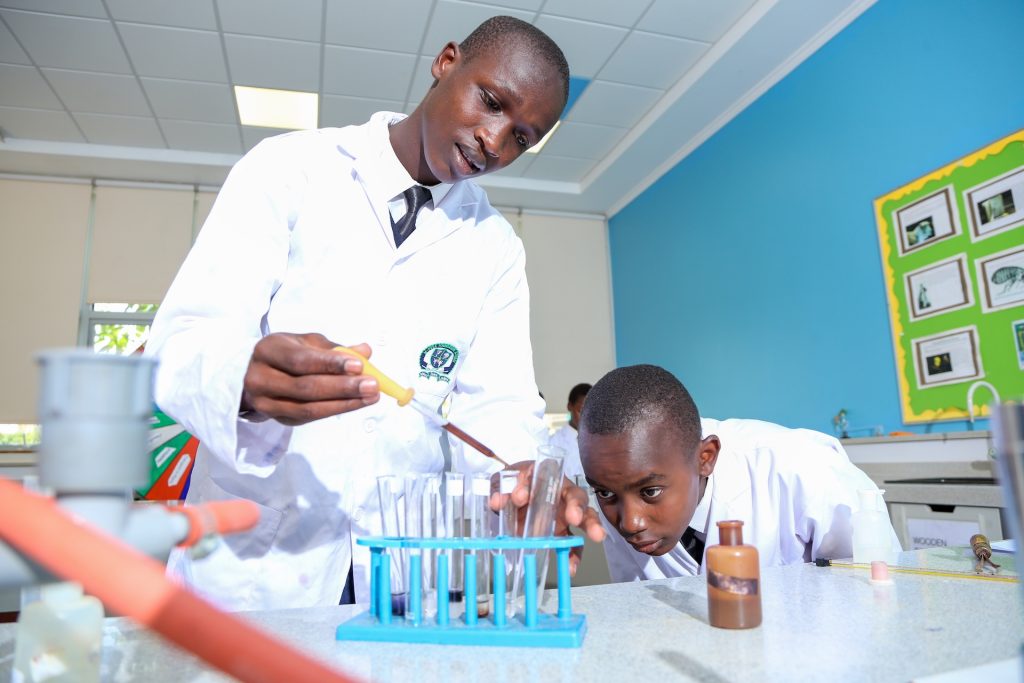
This pathway develops problem-solving, innovation, and technological capability through Core Mathematics, Biology, Chemistry, Physics, Computer Science, Electricity, Agriculture, and Home Science, with Geography offered as a complementary subject.

Through personalised learning, mentorship, and practical application, the Academy empowers students to discover their purpose, develop future-ready competencies, and transition confidently to university, technical and vocational education, entrepreneurship, and careers both locally and globally.

IBDP Curriculum

We offer the International Baccalaureate (IB) programmes, selected for their ability to nurture curiosity, leadership, and global-mindedness in learners from all 47 counties of Kenya. Our curriculum is contextual, practical, and values-based—designed to meet the diverse needs of our students.

IBDP

International Baccalaureate Curriculum (IBDP)

Offered to students aged 16–19, the IBDP is a globally respected programme that promotes intellectual rigour, emotional intelligence, and community awareness.

Students take:

  • 3–4 subjects at Higher Level (240 hours each)
  • 3 subjects at Standard Level (150 hours each)
  • Plus the DP Core: Theory of Knowledge, Extended Essay, and Creativity, Activity, Service (CAS)

To successfully, go through the programme, DP students must choose at least 3 and no more than 4 DP subjects taken at higher level (for 240 hours) and 3 DP subjects taken at standard level (for 150 hours), in addition to the DP Core to satisfy the passing conditions.

Approaches to Teaching & Learning

The six subject groups are

  • Group 1: Studies in Language & Literature: English A and/or Language A: Literature in Kiswahili.
  • Group 2: Language Acquisition courses in either: French B: SL or Abinitio or German B: SL or Abinitio or Mandarin B: SL or Abinitio or Spanish B: SL or Abinitio
  • Group 3: Individuals & Societies – A student must take at least 1 course in this category either, History or Geography or Environmental Systems & Societies or World Religions or Economics or business management or Digital Societies.
  • Group 4 : Sciences – A student must take at least 1 course in this group Either, Physics or Chemistry or Biology or Environmental Systems and Society.
  • Group 5: Math Analysis & Approaches, or Math Application & Interpretation.
  • Group 6: – Visual Arts and Theatre Arts.
Theory of Knowledge
It asks students to reflect on the nature of knowledge, and on how we know what we claim to know.
The Extended Essay
The extended essay is an independent, self-directed piece of research, finishing with a 4,000-word paper.
Creativity, Activity, Service
Creativity, activity, service (CAS) is one of the three essential elements that every student must complete as part of the Diploma Programme (DP).

IBMYP

International Baccalaureate Middle Years Programme (MYP)

All students in MYP 3, 4 & 5 are part of our IB Middle Years Programme (MYP).  Our aim is to provide an education that enables students make sense of the complexities of the world around them, as well as equipping them with the skills and dispositions needed for taking responsible action for the future. We inspire and challenge them to become thinkers,  leaders, caring, open-minded and reflective thinkers who can help shape a better and more peaceful world.

We offer students a broad, balanced, conceptual and connected range of academic studies and learning experiences. This enables the creation of frameworks within which knowledge can be acquired, organize powerful ideas that are relevant across subject areas and that help to integrate learning and add coherence to the curriculum.

Approaches to Teaching & Learning

Students in MYP 4 and 5 take the following subjects:

  1. Language and literature (English, Swahili)
  2. Language acquisition (Spanish, French, German, Mandarin)
  3. Individuals and societies (integrated humanities)
  4. Sciences (Biology, Chemistry, Physics)
  5. Mathematics (standard and extended)
  6. Physical and health education
  7. Design (product and digital)
  8. Arts (Visual Arts, Drama, Music)
  9. An Interdisciplinary Learning
  10. Service as Action
  11. Personal Project
Personal Project Exhibition
Final-year MYP students explore a personal interest over time, consolidating learning and building essential skills for further education and life.
Service as Action
We live in an era of globalization, evolving ethics, and sustainability. As teachers, we must balance identity-driven projects with the challenges and diverse perspectives of our time.

Access and Inclusion

We believe every learner deserves an equal opportunity to succeed. Our Access & Inclusion program supports full participation in all academic activities by removing barriers and providing thoughtful accommodations for teaching, learning, and assessment. 

Resource Centre

Our fully equipped, world-class resource centre is a vibrant learning environment that supports research, reading, and collaboration. It offers a wide range of curated print and digital resources, including access to online databases such as Britannica School and Gale. Open throughout the week and on Saturdays, it provides flexible access during and after school hours. The space also supports club activities such as Rotary and Model United Nations (MUN). The resource centre runs reading programs, such as author visits, book weeks, and reading challenges, to nurture a love for reading. Students also participate in information literacy sessions that build critical research skills and encourage responsible information use.